Pu-erh Tea Under the Microscope: What the Science Really Says About Its Health Benefits


Of all the teas that pass through my hands, Pu-erh is the one people ask me about the most — and the one most wrapped in myth. It’s sold as a miracle cholesterol cure. It’s sold as a magic weight-loss potion. Neither claim is quite right, and neither does justice to what’s actually a genuinely fascinating tea with real, evolving science behind it.
So I sat down with a comprehensive 2022 scientific review that pulled together years of chemistry and biology research on Pu-erh, and I want to walk you through what it found, in plain English.
What Makes Pu-erh Different From Every Other Tea
Every tea on earth … white, green, oolong, black, Pu-erh … comes from the same plant, Camellia sinensis. What sets Pu-erh apart is what happens after the leaves are picked.
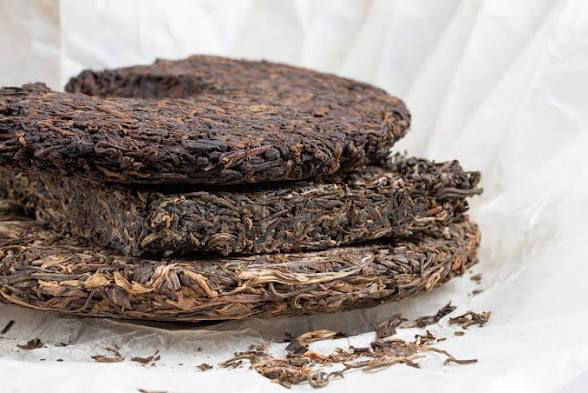
Traditional Pu-erh is made from a broad-leaf variety of the tea plant grown in Yunnan, China, and instead of simply drying or oxidizing the leaf, it’s deliberately fermented by living microorganisms such as molds, yeasts, and bacteria that work the leaf over weeks, months, or even years.
That microbial step, sometimes called wo dui (“pile fermentation”), is genuinely unique in the tea world. It’s also why Pu-erh comes in two very different styles:
Raw (sheng) Pu-erh — pressed and left to age slowly and naturally, sometimes for decades, the way a wine cellars. It changes gradually, developing complexity over years.
Ripened (shou) Pu-erh — put through an accelerated, controlled pile-fermentation that compresses years of aging into weeks, producing that deep, mellow, earthy cup Pu-erh is famous for much sooner.
Both are real Pu-erh, and important for the science that follows, both have meaningfully different chemistry, so “Pu-erh does X” is almost always shorthand for “one or both styles of Pu-erh have shown X in certain studies.”
The Chemistry: What’s Actually in Your Cup
Fresh tea leaf is loaded with catechins, this is the astringent polyphenols green tea is famous for. During Pu-erh’s fermentation, microbial enzymes go to work on those catechins and gradually convert them into a different family of compounds: theaflavins, thearubigins, and especially theabrownins, the dark pigments responsible for Pu-erh’s signature reddish-brown liquor and mellow, non-astringent taste. Research comparing tea types with HPLC-mass spectrometry has confirmed this trade-off directly: as fermentation progresses, catechin levels drop while gallic acid and caffeine levels rise, which is part of why a well-aged Pu-erh tastes so much smoother than a green tea, even though it can pack a bit more caffeine punch.
A few other chemical characters worth knowing:
Tea polysaccharides are complex carbohydrates that build up during fermentation and are being studied for their own antioxidant and metabolic effects.
Gallic acid is a simple phenolic acid that increases substantially during fermentation and shows up repeatedly in the review as a driver of Pu-erh’s antioxidant and cholesterol-related activity.
Trace lovastatin is genuinely one of the most interesting findings in Pu-erh research. Some of the same fungi active in fermentation (species of Aspergillus and Monascus) can produce lovastatin, a naturally occurring compound chemically identical to a prescription cholesterol drug.
Before you get too excited about that last one: the amounts are minuscule. Measured levels in aged Pu-erh run in the tens to low hundreds of nanograms per gram of tea, by most estimates, you’d need to drink an absurd, impractical quantity of tea to match even a single low-dose statin pill. It’s a beautiful piece of tea chemistry, not a substitute for medication.
Heart Health: Cholesterol, Triglycerides, and That Famous “Natural Statin”
The lovastatin story gets the headlines, but the more compelling heart-health mechanism in the research is theabrownin.
A 2019 study published in Nature Communications found that theabrownin works by reshaping the gut microbiome itself: it suppresses certain gut bacteria, which changes how bile acids are processed, which in turn signals the liver to burn through more of its own cholesterol. Notably, this study tested the mechanism in both mice and a small human group, giving it more real-world weight than a purely animal study.
On the human side, the most substantial trial to date is a 2016 randomized, double-blind, placebo-controlled study of 59 overweight or mildly high-cholesterol adults in North America.
Participants drank a Pu-erh tea extract daily for 20 weeks. The Pu-erh group saw meaningful reductions in cholesterol, triglycerides, and BMI compared to placebo, with benefits building steadily over the study period. It’s an encouraging result with one honest asterisk: the study was funded by the tea extract’s manufacturer, which doesn’t invalidate the findings but is worth knowing as you weigh them.
Blood Sugar and Metabolic Support
The review also covers a body of research … mostly in animal models, with a growing number of supporting human observations, on Pu-erh’s effects on blood glucose control and metabolic syndrome. Fermented Pu-erh and its theabrownin content have been linked to improved insulin sensitivity and healthier lipid handling in diabetic and obese animal models, and a separate systematic review and meta-analysis focused specifically on Pu-erh’s anti-hyperglycaemic effects, pooling data across multiple studies to look for a consistent signal.
This research is promising and mechanistically plausible, but not yet the subject of the kind of large, rigorous human trials that would let anyone call it a treatment for diabetes.
Weight Management and the Gut Microbiome
This is where a lot of Pu-erh’s popular reputation comes from, and the research does offer real support, largely through the same theabrownin-and-gut-bacteria pathway that helps explain its cholesterol effects. Animal studies consistently show reduced body weight, fat mass, and improved gut microbial diversity with Pu-erh or theabrownin supplementation. The human trial mentioned above also found real BMI reductions over 20 weeks.
What it isn’t: a shortcut. Every study showing meaningful weight change paired the tea with a controlled, sustained intervention, not a single cup sipped occasionally. This must become a regular daily practice.
Antioxidant Power (and Aging Gracefully)
Antioxidant activity is Pu-erh’s best-established benefit, and it’s not close. Multiple studies using standard lab antioxidant assays (the polyphenol-chemistry equivalent of a stress test) have found that Pu-erh’s total polyphenol and catechin content correlates directly with its free-radical-scavenging power, and that gallic acid content tracks closely with a second antioxidant measure.
In plain terms: the compounds fermentation creates are doing measurable antioxidant work in the cup, which is the foundation most of Pu-erh’s other studied benefits are thought to build on.
Brain Health: Neuroprotective Potential
This is the most exciting and the most preliminary section of the science. A 2026 study in npj Science of Food found that both raw and ripened Pu-erh meaningfully improved cognitive performance and reduced brain tissue damage in aging mice, largely by restoring a healthier gut microbiome, which is more evidence for the “gut-brain axis” connecting what you drink to how your brain ages.
Separately, researchers have used a microscopic roundworm model of Alzheimer’s disease to show that compounds from a purple-leaf Pu-erh variety reduced toxicity from amyloid protein buildup, the same protein implicated in human Alzheimer’s.
I want to be very direct about what this does and doesn’t mean: these are mouse and roundworm studies, not human trials, and “protects worm neurons from amyloid” is a meaningful early scientific signal, not a dementia treatment. This is definitely a promising early-stage research worth watching.
Bone Health, Digestion, and Microbial Defense
Three more bioactivities round out the review’s findings, each at a different stage of evidence:
Bone health, in a study of rats with surgically induced bone loss (a standard model for post-menopausal osteoporosis), Pu-erh tea extract meaningfully preserved bone density and bone strength compared to untreated animals. It’s animal evidence only so far, but tea drinking broadly has a reasonable track record in human bone-health research, which makes this a very plausible extension.
Digestive support, Pu-erh has a long traditional reputation as a digestive aid after rich meals, and the review notes laxative activity among its documented bioactivities, consistent with why it’s traditionally served alongside dim sum and fatty foods in Cantonese tea culture.
Antimicrobial activity, a substantial body of lab research (a recent tally counted 25 separate microbiological studies) has found that Pu-erh compounds, including one called strictinin, can inhibit the growth of various bacteria and viruses in the lab. This is a “in a petri dish” finding, but useful for understanding the tea’s chemistry, not a reason to reach for it over medical care when you’re actually sick.
The Honest Caveat: What the Science Doesn’t Yet Prove
Across this entire body of research, the authors are candid that human clinical trials remain limited, and that existing studies aren’t yet robust enough to firmly establish Pu-erh as a therapeutic treatment for any condition. Most of what’s described above is strong in mechanism and animal evidence, with human confirmation still catching up. The cholesterol trial being the clearest exception.
There’s also a practical safety note worth being upfront about. Tea plants naturally concentrate fluoride and can pick up trace heavy metals from soil, and because Pu-erh’s fermentation involves living mold cultures, contamination is a real question researchers take seriously.
The reassuring news: published testing of properly produced Pu-erh has generally found fluoride and heavy metal levels within recommended safety limits, and well-controlled commercial fermentation keeps harmful mold byproducts (mycotoxins) undetectable in tested samples. The takeaway isn’t to worry, it’s to buy from reputable, quality-focused sources, which is exactly the same advice I’d give for any fermented food.
Raw (Sheng) vs. Ripened (Shou): Which One Should You Drink?
Since the two styles genuinely differ in chemistry, it’s worth choosing with intention rather than by accident:
Choose raw (sheng) if you want a brighter, more complex, evolving cup, and don’t mind that a young raw Pu-erh can be quite bold and slightly bitter before it mellows with age. It retains more of the original catechins early on.
Choose ripened (shou) if you want that deep, smooth, earthy profile right away, along with the highest concentrations of the theabrownins and gallic acid most directly tied to the cholesterol and antioxidant research above.
Both are worth having in your cabinet. I keep both on hand for this reason. They’re really two different teas wearing the same name.
How to Brew and Enjoy It Well
Rinse the leaves with hot water for a few seconds and discard . This wakes the compressed leaf and rinses off any surface dust from aging.
Steep gongfu-style (The Mindful Cup): a small amount of leaf, water just off the boil, and short 10–30 second infusions, several times over. Pu-erh rewards patience the way a good oolong does.
Enjoy it after a rich meal , it lines up neatly with its studied digestive and lipid-modulating properties.
Pair it with fatty, savory food. Pu-erh’s tannic backbone is exactly what makes it my go-to charcuterie tea.

The Bottom Line
Pu-erh tea is not a miracle cure, and it’s not snake oil either. It is a genuinely remarkable fermented food with a growing, credible body of science behind it. The antioxidant benefits are well-established. The cholesterol and metabolic effects are backed by real mechanism and at least one solid human trial.
The brain and bone research is exciting, but early. And a cup of tea, however well-studied, still works best as one piece of a health-conscious life, not a replacement for medical care.
That balance of wonder and honesty is exactly why I love serving tea, and exactly why I wanted to walk you through the real research behind it rather than the marketing.
Take the next step. Taste raw and ripened Pu-erh side by side and taste the chemistry for yourself.
Join us for one of our Botanical Beverage Experiences to learn more about Pu-erh and many other teas & herbs.


Comments